The welcome mimosa: why 2 yeses out of 10 win over the whole room
18 October 2026 · 3 min read
A welcome mimosa looks like a small upsell. Eight in ten guests say no, yet an hour later half the room is drinking one. Here's how it works.
For a lot of brunch spots, offering a welcome mimosa feels almost too easy. Eight out of ten guests say no. Yet an hour later there's a glass on nearly every table, and your Sunday guests head home in a slightly better mood than they came in.
Sound familiar? On Saturday and Sunday mornings your dining room fills up and your team does what it always does. Greet the guests, seat them, hand over the menu, ask what they'd like to drink. Usually it's a cappuccino or a fresh orange juice. Fine, but that's an order guests could just as easily have made at home. The room gets busy without getting lively, and your average check per table hasn't moved in months.
What many owners do next is rework the menu. Add a pricier brunch board, a cocktail page, a weekend specials board by the door. That takes time and design work, and the payoff is small. By the time a guest opens the menu, they've usually already settled on their mood for the morning. The moment to make a difference comes a few minutes earlier: in the first sentence your staff say, before the coats are even off.
The first sentence sets the mood in the room
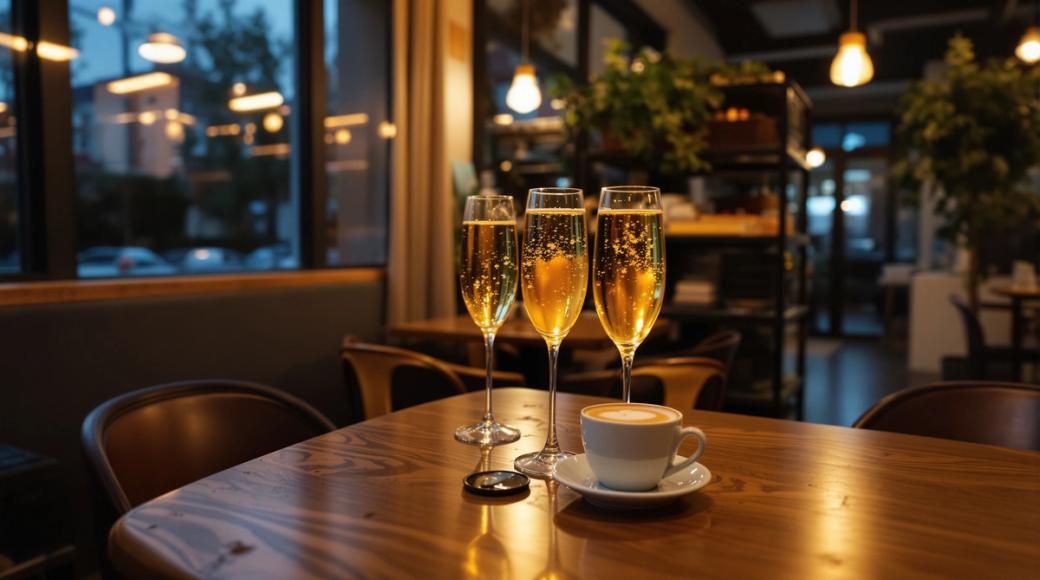
At Teds All Day Brunch, this is written into service training. On weekends, staff open with the same question for every guest: would you like to start with a cappuccino, or go straight for a mimosa? There's no hesitation. It's part of the welcome, and every table gets the offer. Some people might find that too scripted. But the fact that it's scripted is exactly what makes it work. It doesn't depend on a server's mood or on how busy the morning is.
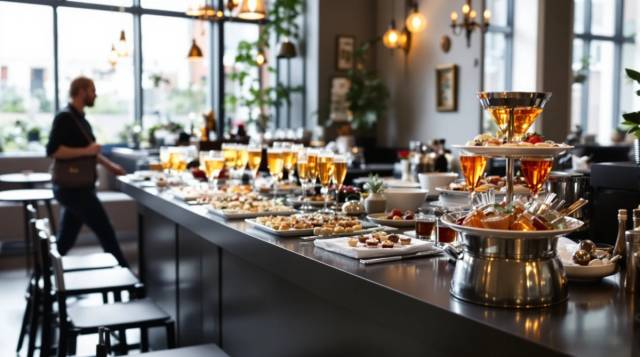
The result follows a predictable pattern. Out of ten guests, eight say no and two say yes. Those two are enough. The next table sees the glass go by, notices how festive it looks, and orders one too. So you don't sell a welcome mimosa table by table. You start a chain reaction that spreads through the room on its own.
Guests are looking for a reason. You give them permission
Look at why that second and third table say yes. It's Sunday. The weather's nice. They've got a weekend without the kids. They're going shopping later. They're celebrating something. Almost every guest who walks in on a Saturday or Sunday morning already has a reason like that. They just need something to say it out loud. A welcome mimosa doesn't sell a drink. It gives guests permission to turn an ordinary morning into an occasion.
Three things that make or break the effect
Watching how this plays out in practice, three conditions stand out. First, a fixed script: every staff member asks the same question, at every table, with no exceptions. Second, visibility: the glass has to catch the eye as it moves through the room, because the effect travels via other tables. Third, timing: it works on weekends, when guests have time and something to celebrate. On a Tuesday morning full of people working on laptops, you'll see the effect far less.
What that mood pays off after the bill
A guest who experienced their brunch as a celebration remembers it. You see the difference at the table and in what happens afterwards. The guest who leaves feeling good is also the one who'll write a review if you ask at the right moment. The atmosphere you create at the door is where your online reputation starts, hours before anyone opens Google.
Your revenue and your reputation are decided in the first minute far more often than on the menu. Build that moment into your training and let the room do the rest. Then make sure you catch the guests who head home happy. AfterTheTable automatically asks for a review by email, text or WhatsApp while the memory is still fresh. AI agents reply to reviews and keep your Google Business posts up to date, so your team can stay focused on that first sentence at the table.
Topic:Costs & revenue
Video transcript
That's the, that's one of our slogans everywhere. Yeah. Now, so now for really, so, and for us, and some people might find it that, okay, maybe that also might, some people find too typical, but we actually do service trainings where we ask our waiting staff to, in the morning, in the weekend, when they, when they welcome guests, whether they want a cappuccino or even start with a mimosa as a fixed welcome to every guest, would you like a mimosa to start with?
And what you then see is then the, let's say out of the 10 people, 8 will say no and 2 will say yes. And before you know it, everybody's on the houses because when they see the first table, then the other table, oh, that's nice. Oh, let's go for it.
Oh, it's a nice day, it's Sunday, or it's a nice, it's nice weather outside, or we have a weekend off without the kids, or we're about to go shopping, which is nice, or we're celebrating a moment, which is also nice. So we really try to amplify that part of it.