Your restaurant local sourcing is a strong story, but nobody sees it online. Here's how to make your local heroes visible in reviews and on Google.
When restaurant local sourcing is at the heart of your kitchen, you buy your chicory from the grower ten kilometres down the road and your mustard from a family business in the area. Your menu is a map of your region. But anyone who looks you up on Google sees three photos of a terrace and a review that says "great food, friendly service".
It's a paradox we see again and again at restaurants with one to three locations. The chef spends years building relationships with local suppliers, often pays more per kilo than at the wholesaler, and talks about it proudly at the table. A Flemish chef who cooked with Belgian produce in Tokyo put it simply: why would you buy your products on the other side of the world when you have them in your own garden? That's a strong story. It just almost never makes it online.
A guest searching for a restaurant nearby doesn't read your menu. They read your Google profile, your last five reviews and maybe your replies to them. If there's nothing there about the asparagus from that one farmer or the beer from the brewery around the corner, then to that searcher you're just another bistro. Your choice to buy local costs you money, but it earns you next to nothing online. That's usually not down to your produce. It's down to where you tell the story.
Your story belongs in your reviews, not on your menu
Most restaurant owners think a nice "about us" page will solve the problem. A few paragraphs about their love of regional produce, a photo of the chef in a vegetable garden. In practice, almost nobody reads that page. Google and your future guests look at what other guests write about you, and at how recently and how often they do it.
What does work: making your local produce show up where searchers actually look. In your review replies, in your Google Business Profile posts, and in the reviews themselves. When a guest writes that the chicory gratin "made with chicory from a local grower" was the highlight, that does more than ten paragraphs on your website. Your guests become ambassadors for your suppliers.
That takes timing. A guest you message the day after dinner still remembers the dish. Two weeks later, all they remember is that it was "cosy". And if you reply to every review personally, mentioning the product and the producer, you show every week what your kitchen stands for.
Three places where local heroes disappear
In the restaurants we work with, we see the local story leak away in three recurring places. The first is the review moment. If you don't ask for reviews, you mostly hear from people who had something to complain about or who happened to feel like writing. They rarely mention where the mustard came from. If you ask deliberately, by email, SMS or WhatsApp within a day of the visit, you get reviews from guests who can still taste the dish.
The reply nobody writes
The second place is the review reply. At businesses with one to ten locations, most reviews go unanswered or get a generic "thanks, see you soon". That's wasted space. A reply like "So glad you enjoyed the asparagus, this month it comes from a grower in our area" takes ten seconds, is seen by every reader who comes after, and gives Google extra context about what your restaurant is. Every unanswered review is a free ad for your suppliers that you're leaving on the table.
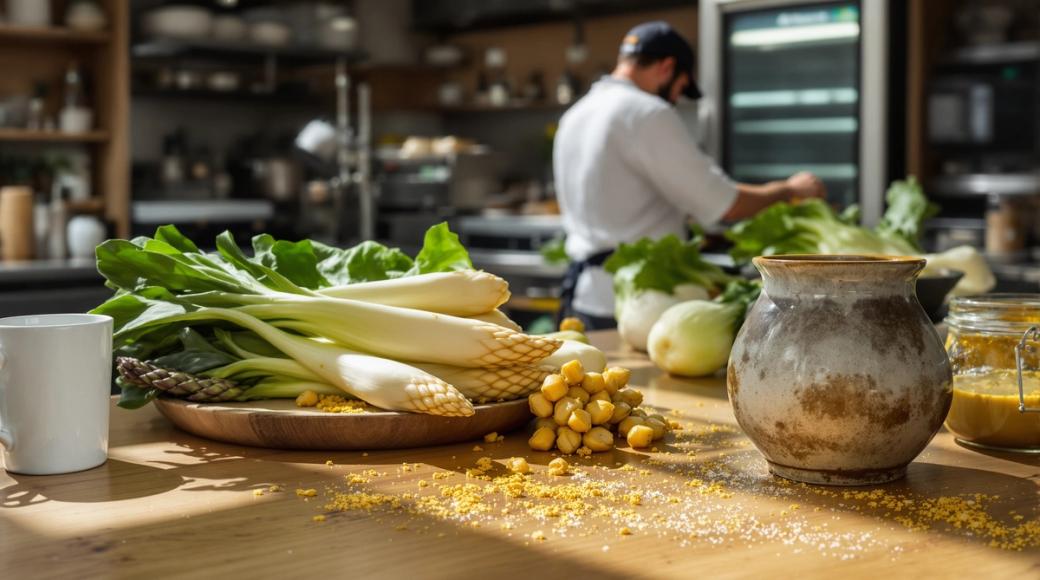
The third place is your Google Business Profile. Many owners post there once a quarter, usually a Christmas menu. Yet the seasons give you something to post about every month: the first chicory, a brewery's new release, the start of asparagus season. These are exactly the products a chef uses abroad to give people a taste of their region. So why hide them at home?
The honest answer is time. An owner who works the kitchen all weekend isn't going to sit down on Monday to answer thirty reviews and write three posts. That's why we hand that work to AI agents: one that asks for reviews at the right moment, one that writes replies in your voice with your suppliers included, and one that updates your Google profile every week. Negative feedback comes to you privately first, so you can fix the problem before it goes public.
Being proud of your local heroes is the easy half. The other half is making sure the guest searching on their phone tonight sees it too. If your local produce only shows up on the plate, you only reach the guests who are already inside. If it shows up in reviews, replies and posts, it brings in the next ones. AfterTheTable handles this for you with AI agents that request reviews, answer them and keep your Google profile up to date, so you can stay in the kitchen.
Topic:Sustainability
Video transcript
I think it's very important to work with local products for different reasons. The first thing is that, yeah, you have to be proud on your roots where you're coming from. And like we are living in Flanders in Belgium, we've got a lot of very perfect products in the area.
So I don't understand why you're gonna buy your products on the other side of the world if you've got it in your garden. You have to support your people around you and, and the local heroes. I call them the local heroes.
Got so many great products, so I really try to, to work with them. Um, it's also kind of, kind of ambassador also of our own products because that's also what, what I think is very interesting when I go to another country. I really want to explored their products and their tomatoes and their, um, all the things that, that they've got really in this country that, that makes this, this country special.
So that's also the reason why I want to work with it in Belgium, and I also want to show it to the world because that's one of my, of my next missions. That is, um, try to, to let the world taste from all the good things that you've got in Belgium. Yeah, I was in, in Japan on the World Expo to cook with all products from my neighborhood, from Flemish part of Belgium.
And I was there with 100 people in Tokyo to let them taste our chicory or mustard or really the beers from Belgium, the chocolate, the waffles, asparagus. So the really the things from from our side. And yeah, it's very, it's great that I can do it.