Restaurant purchasing costs: why your biggest savings are hiding in your invoices
18 October 2026 · 3 min read
Want to cut restaurant purchasing costs without switching suppliers? Data from your two or three main suppliers shows exactly where money leaks out.
Most restaurants try to bring down their restaurant purchasing costs by negotiating harder, when the answer has been sitting in their inbox for months. Every week an invoice arrives from the same two or three suppliers. Those invoices get paid, filed and forgotten.
Almost every hospitality business does the bulk of its purchasing with one, two, or at most three suppliers. The wholesaler for dry goods and fresh produce, a drinks supplier, maybe a separate one for non-food. It feels manageable. You know who to call, the orders keep coming, and at the end of the month the margin is roughly where it should be. But roughly is the problem. At a business with three locations, we see that nobody can say exactly how much was spent per quarter on cleaning cloths, napkins or frying oil, let alone with which supplier.
The result is that purchasing runs on habit. The chef orders what he always orders, from whoever he always orders it from. Nobody asks why the dishcloths come from the wholesaler when the non-food supplier sells them for less. That isn't carelessness. There is simply nobody who gets the time to look into it. And as long as the data is scattered across separate PDFs, that won't change.
One spreadsheet tells you more than a price negotiation
What works is surprisingly simple: put every purchase from your regular suppliers into a single data sheet. Product, supplier, unit price, quantity, date. Do this for at least three months so seasonal peaks don't distort the picture. After that, you don't need complicated analysis. You need common sense, applied to figures you can finally see side by side.
That is a very different exercise from negotiating. When you call for a discount, you're talking about the price of one product with one supplier. When you organise your data, you see patterns: the same items bought from two suppliers, price increases that slipped through unnoticed, products that are consistently over-ordered. The savings rarely come from a better price, but far more often from a better choice of where you buy something.
Three leaks your data exposes
After a few months of organising purchasing data, the same three leaks surface at almost every restaurant. We call them the wrong counter, the silent price increase and the habit order. Each one is invisible on a single invoice and glaringly obvious once you lay three months side by side. The best part: none of these leaks requires you to find a new supplier.
The wrong counter
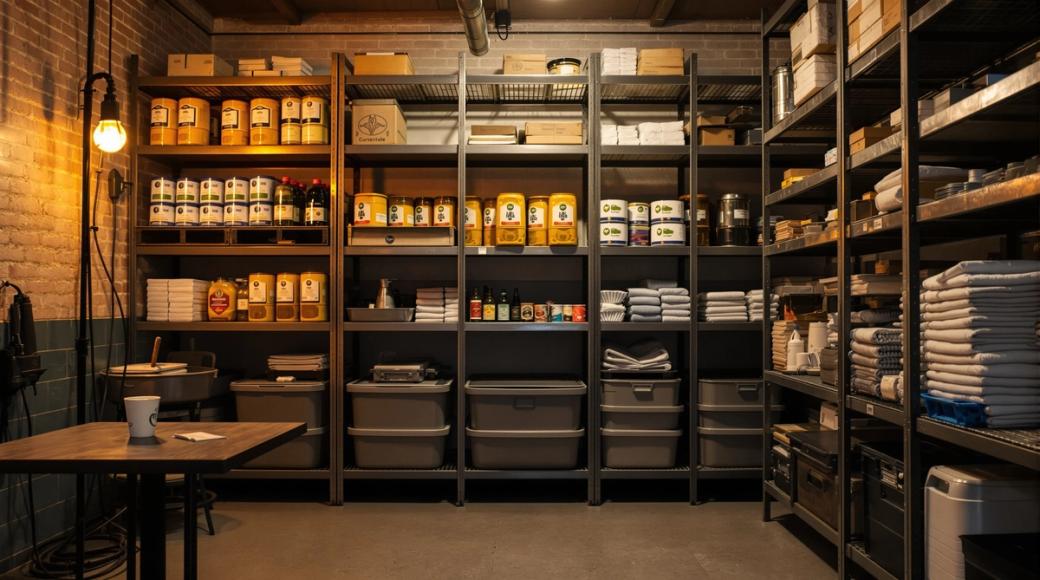
Cleaning cloths from the wholesaler, while your non-food supplier delivers them for less. This is the classic mistake: products end up with whichever supplier you're already ordering from, out of convenience. For groups with five or more locations, that adds up considerably each quarter, because every location follows its own convenience.
Who's going to do this?
This is where it usually stalls. The owner doesn't have time, and neither does the chef. Deliberately give someone a few hours a month to dig into the figures, or let software do the work. The latter is where hospitality is heading: recurring, tedious work that nobody picks up gets handled by an AI agent. That's already happening with reviews and Google profiles. The silent price increase and the habit order only disappear when someone or something flags them again every single month.
Your purchasing data is one of the most underrated sources of savings in your business, precisely because it already exists. The pattern is the same everywhere: valuable work gets left undone because nobody has time for it. AfterTheTable builds AI agents for restaurants that take over exactly that kind of work, from requesting and replying to reviews to Google Business Profile posts and your website. What gets left undone today can happen automatically tomorrow.
Topic:Costs & revenue
Video transcript
Yeah, one simple thing is that if you, if you, uh, like all hospitality companies do their main purchasements at one or two, maybe three companies, so, uh, and, and all those purchasements you can, um, yeah, combine into a data sheet. And that's something which is really valuable if you just take the time, um, or maybe give someone, somebody the time to dive into those figures. And because there are a lot of facts that you can take out of it.
Um, yeah, just to reduce your, your costs on the purchase side, but also understand why are we, uh, yeah, purchasing like cleaning cloths at, at that company. Maybe we should do it in this at another company, you know. So it's, it's just, it's not like, um, it's you using your common sense then based on what you get out of your data.