Brunch restaurant Amsterdam: why the clock decides whether guests find you online
18 October 2026 · 4 min read
A brunch restaurant in Amsterdam can win guests at any hour of the day, but only if Google, your reviews and your profile actually show it. Here's how to make that happen.
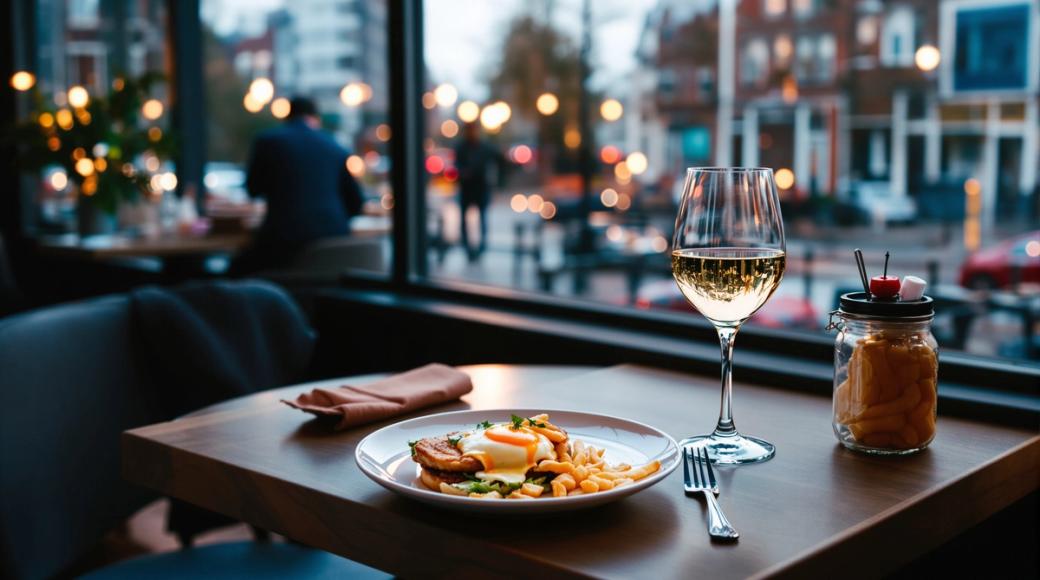
At half past eleven on a Tuesday, someone searches for a brunch restaurant in Amsterdam, because their weekend happens to fall on a Tuesday. They find three places with great photos. For two of them, the reviews mention that the kitchen doesn't serve lunch until noon, so they move on to the third.
That's how Teds All Day Brunch got started. Ten years ago, Sonja, the wife of founder Michiel Huysmans, noticed as a guest in Amsterdam's restaurants and cafés that you couldn't order lunch at 11 a.m. yet, and that by 3 p.m. lunch was already over. Anyone who wanted a mimosa with breakfast got funny looks. Her conclusion was simple: not everyone has their weekend at the same time. That single insight grew into a group of almost 16 locations.
This is where things go wrong in practice. Plenty of owners have the concept of flexible dining times nailed, yet online they still come across as a place with a lunch menu from 12 to 3. Their Google profile only shows weekend photos. Reviews mostly come in after busy Sundays. Guests who dropped by on a weekday afternoon hardly ever write anything. The result: Google never sees that one big strength, brunch at any hour, reflected in what's said about you online.
Your reviews tell people when you're really open
Most owners think getting found comes down to accurate opening hours and a tidy website. You need both, but they don't prove anything. Google and the guest doing the searching put more trust in what other guests write. If twenty recent reviews mention "still ordered eggs benedict at three o'clock" or "a quiet weekday mimosa", your concept has proof. Opening hours you fill in yourself are just a claim.
So you need to deliberately collect reviews about every part of the day, not just the Sunday rush. That only works if the request goes out automatically, shortly after the guest leaves, via WhatsApp, SMS or email. A Tuesday 2:30 p.m. guest then gets a request just like the Saturday morning group does. And if something goes wrong, that feedback reaches you privately first, before a one-star review goes public.
The daypart framework for brunch restaurants
A brunch restaurant is really selling four moments, and each moment needs its own proof online. To spot the gaps, line up your reviews and your Google profile against these four dayparts. At most places, two are well represented and the other two are almost invisible. Yet those invisible moments are exactly where a brunch restaurant in Amsterdam stands apart from an ordinary lunch café.
Four moments, four kinds of proof
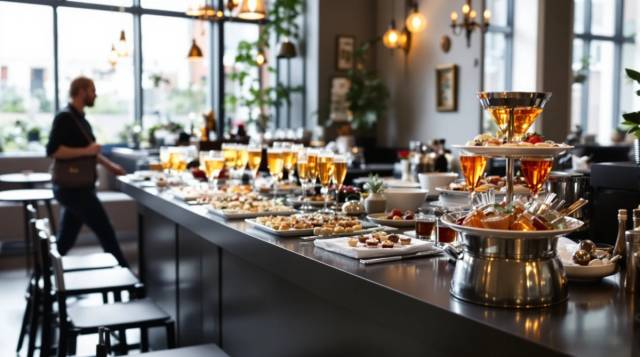
The early start around 9 a.m. is all about coffee and breakfast. The in-between moment around 11 a.m. is the one Sonja was missing ten years ago. The late brunch around 3 p.m. is for people who missed lunch elsewhere. And then there's the leisurely champagne moment, which Huysmans describes as the chance to serve a little extra and really give guests time. Each daypart draws different searches.
Next, check your Google Business Profile daypart by daypart. If your posts only show pancakes on Sunday morning, you're telling Google nothing about 3 p.m. on a Wednesday. Weekly posts that each highlight a different moment, with the dishes and drinks that go with it, keep your profile in line with what guests write in their reviews. A concept that isn't tied to fixed times needs online signals at every hour too, otherwise it only half exists for Google.
Replies that reinforce the concept
The last piece gets the least attention: how you respond to reviews. With 1 location, you can manage to answer them yourself. With 5 or 16 locations, you can't, and reviews sit unanswered for weeks. A good reply echoes what the guest appreciated, such as "so glad you could still enjoy our brunch at half past three", so your responses back up the story of your concept too. AI agents post replies like these automatically on Google, TripAdvisor and Facebook, in your restaurant's own tone of voice.
The Teds concept works because it drops the rules that frustrated guests for years. The same goes for your online presence: if you only show Sunday morning, you're selling just a quarter of your business. AfterTheTable builds AI agents that automatically ask for reviews, reply to them, keep your Google Business Profile updated with posts and maintain your website. That way every moment of your brunch can be found online too, without your team having to deal with it after service.
Topic:Guests
Video transcript
So, um, um, we feel that we are, uh, still building, um, into a hobby that originated 10 years ago, which started really small with one restaurant and which has now grown into a group of restaurants of almost 16 locations open, which we do based on the premise and the idea that my wife had 10 years ago, Sonja, when she was walking and as a guest in Amsterdam hospitality venues that she noticed that when she would come in at somewhere at 11 AM that it wasn't possible to order lunch any yet, or at 3 PM the lunch was already gone. People were looking strange if you would, if you would want some champagne for your breakfast or some mimosas. But people don't know when who is having their weekend and how your day works and how your day is going.
So she basically came up with the idea, okay, so we should limit a little bit the rules that people have or that they were currently in place. And she felt the best way to describe that was to offer brunch because brunch feels a little bit the in-between moment that you can do before lunch or after lunch or whenever and is a moment on hospitality where you can basically serve a little bit extra and have some nice drinks on the side and really have a nice leisurely moment and not as functional as people do. And that's the philosophy where we are building on, and we hope to have a lot more locations than we currently have.